
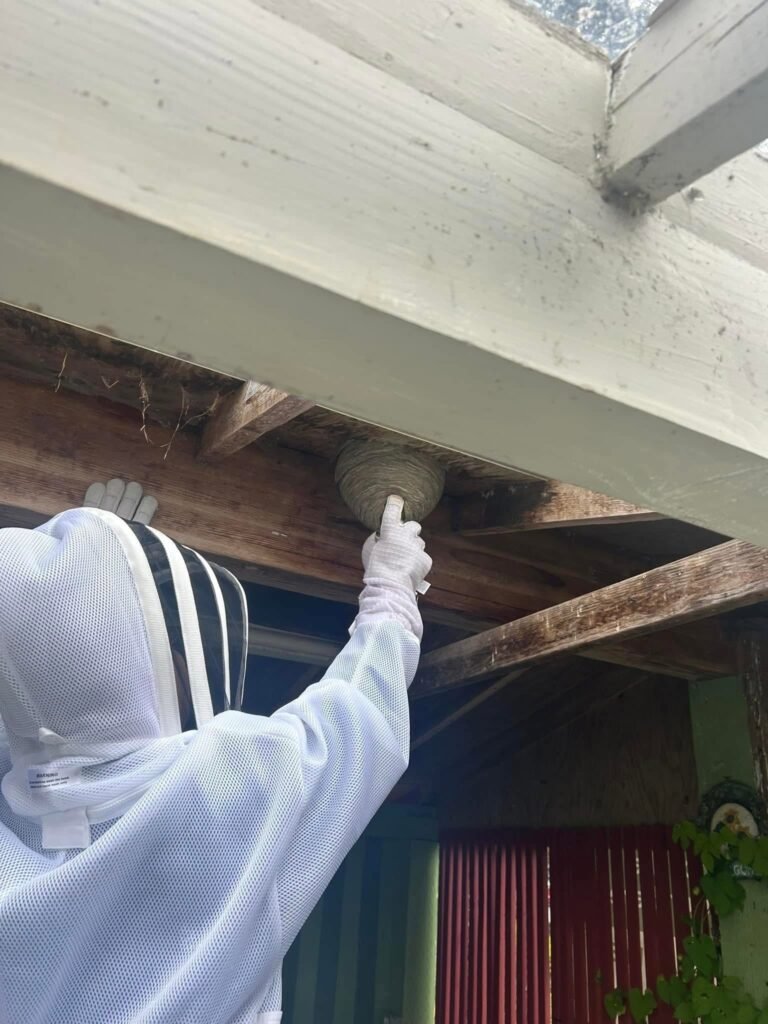
A large gray, football-shaped paper nest in a tree, shrub, or under the eaves is typically a bald-faced hornet nest. The colony is highly defensive and can sting repeatedly, so this is one nest you should not try to remove yourself — especially by late summer when it is largest.
What’s most likely going on
A single queen starts the nest in spring and the colony grows all summer, reaching basketball size and peak aggression in August and September. Bald-faced hornets vigorously defend the nest and attack in numbers when disturbed.
What it means for your home
Stings are painful and can come in multiples if the nest is disturbed — a serious risk for anyone allergic, and especially hazardous when the nest is near doors, decks, or play areas.
What to do next
We treat and remove the nest safely, timing the work to reduce risk, so you are not attempting a dangerous DIY knockdown. You can read more in our Pest Library entry on bald-faced hornets, or head straight to our Wasp & Hornet Control service.
Reviewed by Matthew — Salty Dog Pest Control. WSDA-licensed structural pest applicator (License #101709). Veteran- and family-owned, serving Whidbey Island, Fidalgo Island, and west Skagit County.
Frequently asked questions
Can I knock the nest down myself?
It is strongly discouraged — bald-faced hornets defend aggressively and sting repeatedly. Professional removal is far safer, especially if anyone is allergic.
Why did the nest get so big so fast?
Colonies build all summer and peak in August and September, which is when the nest becomes most visible and most defensive.
Not sure what you’re dealing with? Call (360) 206-3293 for a free estimate over the phone, or browse the full Pest Library.