
House centipedes are fast, many-legged predators that hunt other insects in damp basements, crawl spaces, and bathrooms. Startling but essentially harmless, they are common in humid Whidbey structures and indicate a moisture and prey-insect problem.
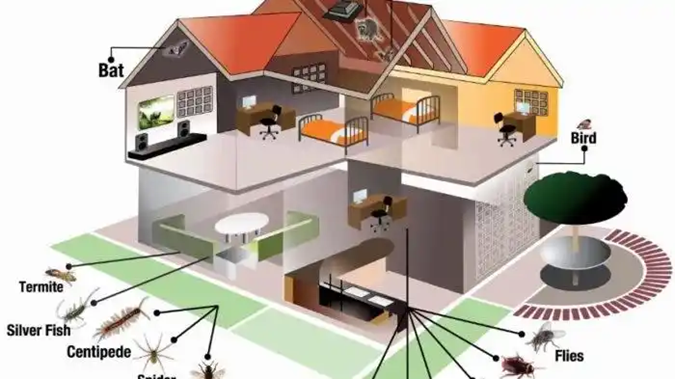
How to identify house centipedes
Up to about 1.5 inches with 15 pairs of very long legs and a flattened yellow-gray body with dark stripes. They move in rapid bursts.
Behavior & season on Whidbey & Fidalgo
They hunt at night for insects and spiders in damp, sheltered areas, needing humidity to survive. They are solitary and most visible in bathrooms, basements, and crawl spaces.
Why house centipedes are a problem
They can deliver a mild, wasp-like pinch only if handled, and are otherwise harmless. Their presence indicates enough moisture and prey insects to support a predator, which is the real issue.
Signs of house centipedes activity
- Fast, long-legged centipedes in bathrooms or crawl spaces
- Sightings at night in damp rooms
- Presence of other insects they feed on
- Activity where humidity is high
How Salty Dog treats house centipedes
We reduce the moisture and prey insects that sustain them and treat harborage in the damp areas where they shelter. Learn more about our Crawl Space Restoration service, or browse the full Pest Library.
Reviewed by Matthew — Salty Dog Pest Control. WSDA-licensed structural pest applicator (License #101709). Veteran- and family-owned, serving Whidbey Island, Fidalgo Island, and west Skagit County.
Frequently asked questions
Do house centipedes bite?
Only if handled, and the pinch is mild. They are harmless predators that actually eat other household pests.
Why do I have them?
They need dampness and prey insects. Seeing them indicates a moisture issue and an existing insect population feeding them.
Had a good experience with Salty Dog? Leave us a review — it helps your Whidbey and Fidalgo neighbors find honest, local pest control.