
The old house borer is a wood-boring beetle that attacks seasoned softwood framing, sometimes audible as a rasping chewing sound in walls. Though less common here, it can cause significant structural damage over years in Northwest homes.
How to identify old house borers
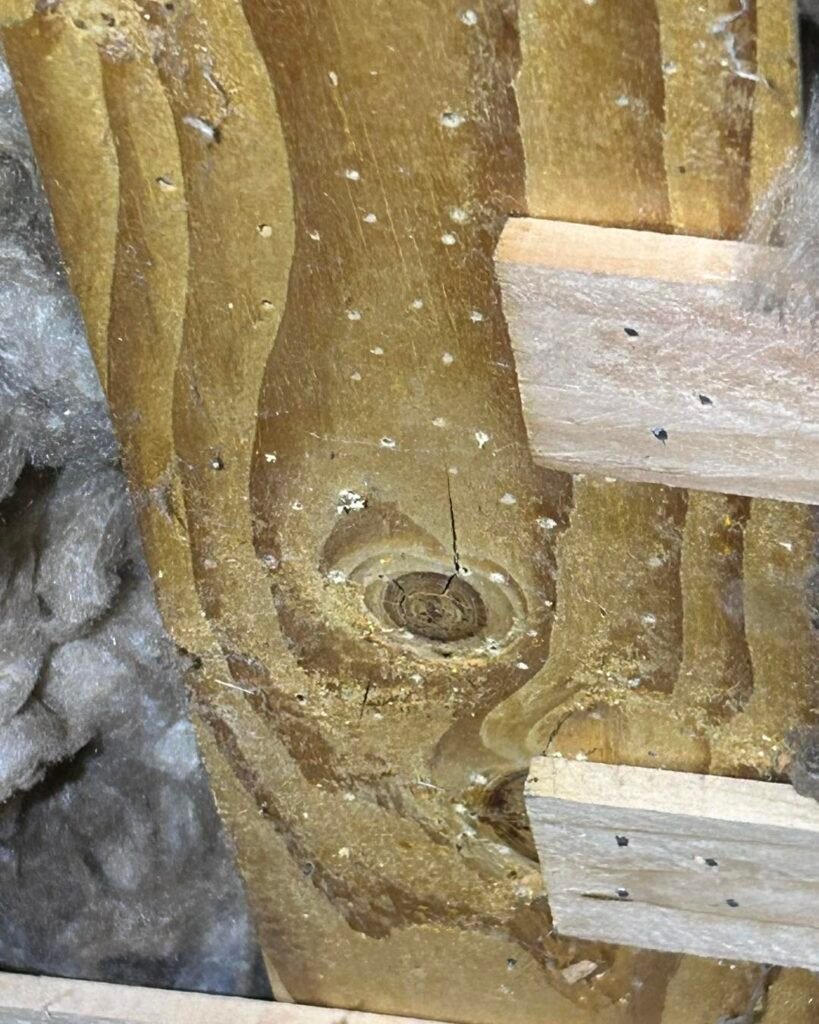
Larger beetles, 5/8 to 1 inch, brownish-black, with the larvae producing oval exit holes about 1/4 inch and tightly packed, sawdust-like frass. Larvae can sometimes be heard chewing.
Behavior & season on Whidbey & Fidalgo
Despite the name, it often infests newer softwood construction. Larvae tunnel for years, favoring the warmer, drier softwood of framing, and emerge as adults to reinfest.
Why old house borers are a problem
Prolonged larval feeding hollows structural softwood and can seriously compromise framing. Reinfestation of the same structure means damage compounds if untreated.
Signs of old house borers activity
- Oval exit holes in softwood framing
- A rasping or ticking sound from active larvae in walls
- Tightly packed powdery frass in galleries
- Blistered wood surface over tunnels
How Salty Dog treats old house borers
We evaluate the affected framing, treat to stop active larvae, and advise on conditions that discourage reinfestation. Learn more about our Wood-Destroying Beetle Treatment service, or browse the full Pest Library.
Reviewed by Matthew — Salty Dog Pest Control. WSDA-licensed structural pest applicator (License #101709). Veteran- and family-owned, serving Whidbey Island, Fidalgo Island, and west Skagit County.
Frequently asked questions
Can I really hear them in the wall?
Sometimes — old house borer larvae can produce an audible rasping sound as they chew through softwood framing.
Do they only attack old houses?
No. Despite the name, they frequently infest seasoned softwood in newer construction as well.
Had a good experience with Salty Dog? Leave us a review — it helps your Whidbey and Fidalgo neighbors find honest, local pest control.