
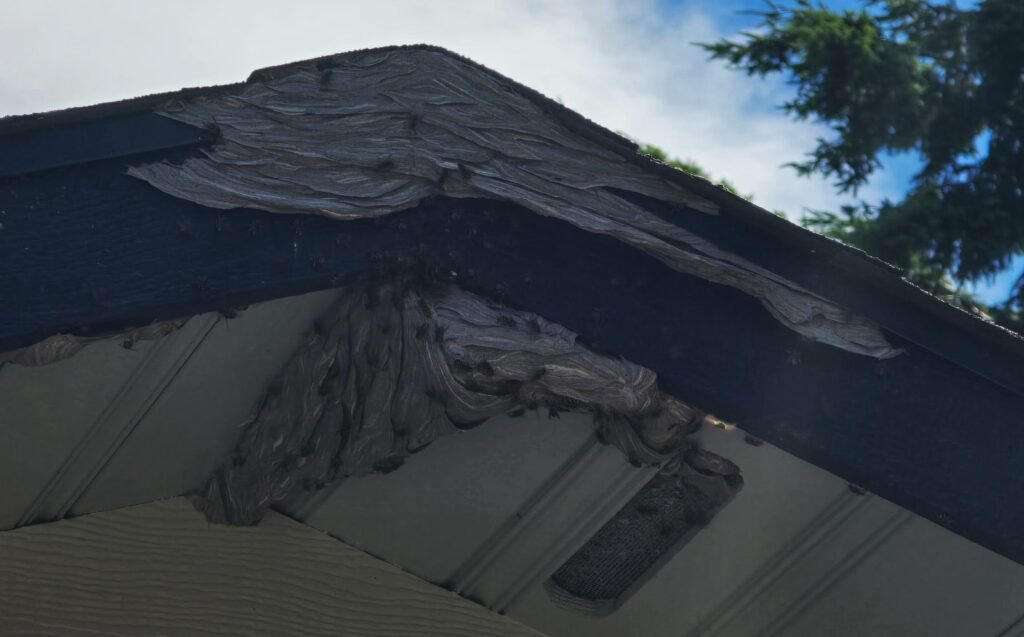
Paper wasps build open, umbrella-shaped nests under eaves, railings, and in wall vents. Less aggressive than yellowjackets but still capable of painful stings, they are a familiar spring-through-fall sight on Whidbey and Fidalgo homes.
How to identify paper wasps
Slender, 3/4 to 1 inch, brownish with yellow or reddish markings and long dangling legs in flight. Their nests are open combs with visible cells, not enclosed.
Behavior & season on Whidbey & Fidalgo
Founded by overwintering queens in spring, colonies stay small and defend the immediate nest area. They forage on insects and are most noticeable around eaves and porches through summer.
Why paper wasps are a problem
They sting when the nest is approached or disturbed, a concern around doorways, decks, and play areas, and an allergy risk for sensitive individuals, though they are less defensive than yellowjackets.
Signs of paper wasps activity
- Open, umbrella-shaped combs under eaves or railings
- Wasps with long trailing legs hovering near the nest
- Nests in vents, grills, and porch corners
- Activity from spring through early fall
How Salty Dog treats paper wasps
We remove accessible nests and treat harborage around eaves and entries so they do not simply rebuild in the same spot. Learn more about our Wasp & Hornet Control service, or browse the full Pest Library.
Reviewed by Matthew — Salty Dog Pest Control. WSDA-licensed structural pest applicator (License #101709). Veteran- and family-owned, serving Whidbey Island, Fidalgo Island, and west Skagit County.
Frequently asked questions
Are paper wasps dangerous?
They are less aggressive than yellowjackets but will sting to defend the nest — a real concern near doors and for anyone allergic.
They keep rebuilding in the same corner. Why?
Sheltered eaves and vents are ideal nesting spots. Treating the harborage, not just the nest, discourages rebuilding.
Had a good experience with Salty Dog? Leave us a review — it helps your Whidbey and Fidalgo neighbors find honest, local pest control.