
Velvety tree ants are Pacific Northwest natives with a black abdomen, reddish thorax, and dark head. They nest in dead wood and tree cavities and will move into damp structural wood, giving off a strong odor when disturbed.
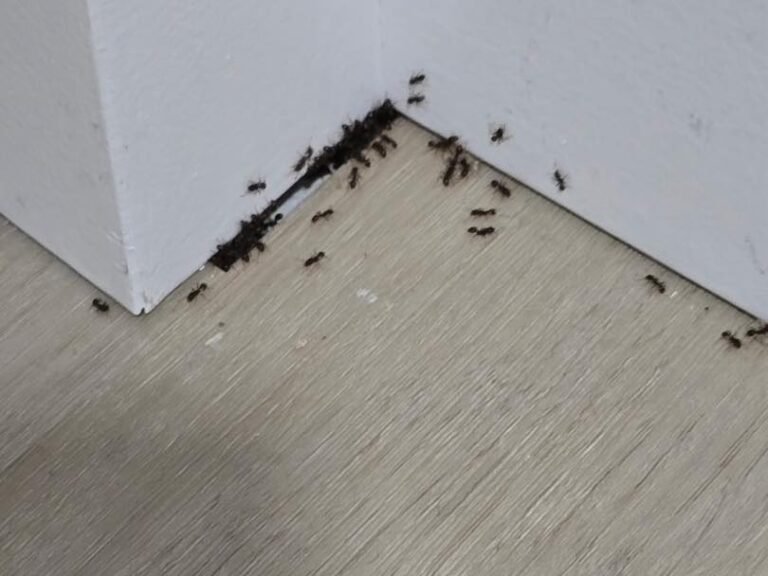
How to identify velvety tree ants
Workers vary from 1/8 to 1/4 inch, with a velvety black abdomen, red-brown thorax, and blackish head. They emit a pungent smell when crushed and can bite.
Behavior & season on Whidbey & Fidalgo
Native to our wooded, coastal setting, they nest in dead limbs, stumps, and moisture-damaged framing, and forage along trees touching the house. They are most active in the warmer months.
Why velvety tree ants are a problem
They can excavate damp structural wood like carpenter ants and deliver a painful bite. Large colonies near a home are difficult to control without finding the main nest.
Signs of velvety tree ants activity
- Fast, aggressive ants with a red-and-black body
- Strong odor when disturbed
- Nesting in dead limbs, stumps, or damp framing
- Trails along branches contacting the roof or siding
How Salty Dog treats velvety tree ants
We trace foraging trails back to the nest, treat directly, and trim vegetation contact so they cannot bridge onto the structure. Learn more about our Carpenter Ant Control service, or browse the full Pest Library.
Reviewed by Matthew — Salty Dog Pest Control. WSDA-licensed structural pest applicator (License #101709). Veteran- and family-owned, serving Whidbey Island, Fidalgo Island, and west Skagit County.
Frequently asked questions
Do velvety tree ants damage homes?
They can hollow out damp structural wood similar to carpenter ants, especially where limbs touch the house.
Do they bite?
Yes — they are more aggressive than most local ants and can deliver a sharp, spraying bite.
Had a good experience with Salty Dog? Leave us a review — it helps your Whidbey and Fidalgo neighbors find honest, local pest control.