
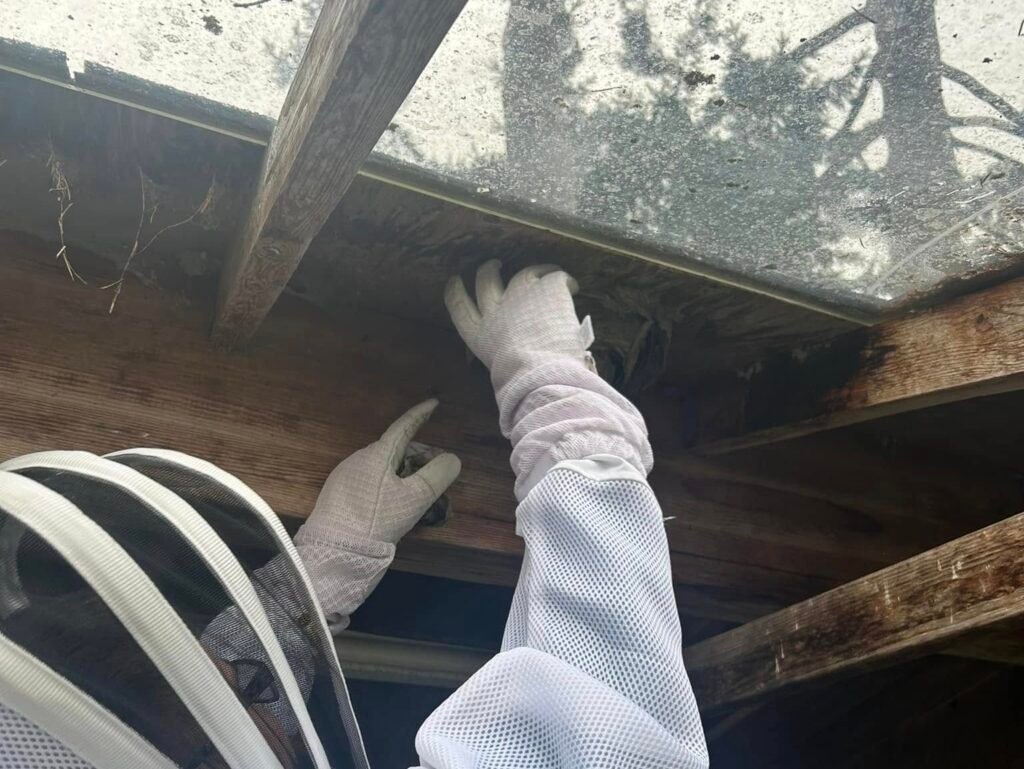
Wasps steadily entering and leaving a gap in your siding, soffit, or wall almost always means a hidden nest inside the void. Do not seal the hole — that traps them and drives them into your living space. It needs to be treated first.
What’s most likely going on
Yellowjackets and some paper wasps readily nest in wall voids, soffits, and cavities, using a single exterior gap as the entrance. The visible traffic is the whole colony coming and going from a nest you cannot see.
What it means for your home
Void nests can grow large and are easy to disturb unknowingly, putting anyone nearby at risk of multiple stings — a serious concern for anyone with an allergy. Sealing the entry without treating drives them indoors.
What to do next
We locate and treat the concealed nest safely, then advise on sealing once the colony is gone. You can read more in our Pest Library entry on yellowjackets, or head straight to our Wasp & Hornet Control service.
Reviewed by Matthew — Salty Dog Pest Control. WSDA-licensed structural pest applicator (License #101709). Veteran- and family-owned, serving Whidbey Island, Fidalgo Island, and west Skagit County.
Frequently asked questions
Should I plug the hole they are using?
No — that traps the colony and often pushes them through the wall into your home. The nest has to be treated before the gap is sealed.
How big is the nest inside my wall?
It can be substantial by late summer. Because it is hidden, professional treatment is far safer than guessing.
Not sure what you’re dealing with? Call (360) 206-3293 for a free estimate over the phone, or browse the full Pest Library.